
Be The King: Judge Destiny
Hong Kong Pixel Peak Technology Co., LimitedRole Playing
4.013.60K Reviews
- Version
- 7.8.10103124
- Installs
- 1.00M
- Age Rating
- Teen
Screenshots



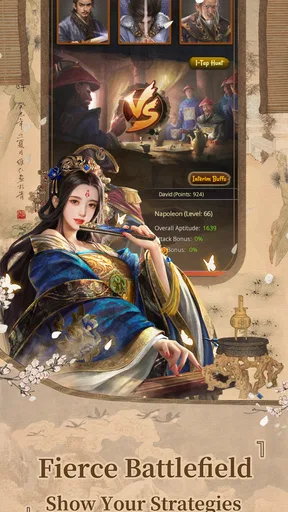
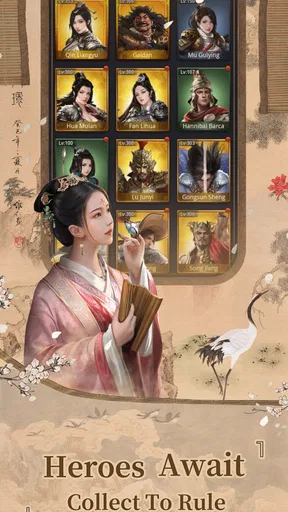



Our Review of Be The King: Judge Destiny
 Analysis by Appyee
I spent time with Be The King: Judge Destiny as a mobile role-playing game, and my first impression was that it wants to make courtly ambition feel manageable on a phone. Its central fantasy is easy to understand: build influence, make decisions, develop a position of power, and keep moving toward the throne. That simplicity is useful, because I could start playing without learning a complicated control scheme. At the same time, the game asks for patience. It is less about quick reflexes and more about checking progress, choosing actions, and returning regularly to keep several parts of the experience moving.
The game is free to download, with optional purchases ranging from $0.99 to $125.99 per item. That price range matters because the experience is designed for players who can enjoy gradual progress, while people who dislike visible purchase pressure may find the long-term structure uncomfortable. The Teen content rating also makes it more suitable for older players than young children. Hong Kong Pixel Peak Technology Co., Limited is the developer, and the game has built a sizable audience: it has passed one million installs, with an average score of 4.0 from around 103 thousand ratings and about 14 thousand written reviews.
How the game reads and guides you through its world
The strongest part of the presentation is the clear high-level goal. “Be the king” is not a vague promise when you are actually playing; it gives the game a direction that helps the menus and activities feel connected. I always knew that an action was supposed to improve my standing, strengthen my position, or open another step in the journey. That kind of framing is helpful for anyone who prefers a direct objective instead of an open-ended role-playing game that leaves them wondering what to do next.
Navigation is built around the usual mobile-game rhythm of entering a section, checking available actions, collecting progress, and moving on to another task. I found that structure approachable during short sessions. I could open the game while waiting for an appointment, review what was ready, make a few choices, and leave without needing a long uninterrupted block of time. This makes it a better fit for routine play than for someone looking for a deep, continuous adventure that demands full attention for an hour at a time.
There is also a trade-off in this menu-focused design. A screen can be easy to understand at first glance but still become busy after several systems are introduced. In my experience, the important question is not only “What can I tap?” but “Which action deserves my limited attention right now?” I recommend taking a moment to identify the activity that advances your immediate objective rather than opening every available panel. That small habit reduces the feeling of being pulled in several directions.
The game’s role-playing identity comes more from progression and decisions than from traditional exploration. If you expect a large map where you manually guide a character through every location, this may feel restrained. I saw it more as a management-flavored court adventure: the pleasure comes from improving a position over time and seeing the consequences of repeated choices. That distinction is important when comparing it with action RPGs, turn-based combat games, or story-heavy adventures. It is closer to a structured daily routine than to a console-style quest.
I would have preferred more breathing room in some of the information-heavy moments. Players who read slowly, use a small screen, or need extra time to distinguish icons may want to enlarge system text at the device level where possible and play in a less rushed setting. I would not treat the game as ideal for someone who needs every instruction to be presented in a very spacious, low-density format. Its convenience comes partly from placing many options within quick reach, and that convenience can also make the interface feel crowded.
Readability depends on pace and screen size
For me, the game was easiest to follow when I treated each screen as a small decision rather than trying to absorb the entire interface at once. I checked the title or purpose of a section, looked for the action that was currently available, and then returned to the main flow. This is a practical approach for players who find layered menus tiring. It also helps prevent accidental spending or premature choices, since I was less likely to tap quickly through a screen simply to make it disappear.
That slower method reveals one of the game’s less obvious strengths: it does not require fast hands to make meaningful progress. A player who prefers careful reading can approach it methodically. The weakness is that the game’s appeal can fade if you want constant novelty. Repeating a check-and-claim routine is comfortable for some people and monotonous for others. I would choose it for calm, incremental play, not for a visually simple experience in which every screen is instantly self-explanatory.
Motor, sensory, and attention demands
From a motor perspective, this is more forgiving than a game based on real-time combat, rapid aiming, or complex combinations. Most of my interaction involved ordinary taps and menu selection. That makes it approachable for players who do not enjoy precision controls or who play one-handed. It also suits a phone held in a stable position, such as on a table, where the player can take time before confirming an action.
Still, simple tapping does not mean every player will find it effortless. Repeated navigation can be tiring for someone with limited reach, hand pain, tremors, or difficulty maintaining a grip on a phone. The game is played through a touch screen, so anyone who depends on physical buttons or external input should check how their own device handles mobile games before committing to it. I would not promise a frictionless experience for every motor ability simply because the controls are not reflex-based.
There is no need to react to enemies in a split second in the way an action game demands, which lowers the pressure for players who need extra processing time. I could pause between decisions without feeling that I had missed a combat window. That is a meaningful advantage in everyday use. Someone can play while mentally tired, provided they are comfortable with reading several choices and keeping track of gradual progress.
Sensory comfort is more mixed. The courtly theme, character presentation, and reward-driven structure create a steady stream of visual information. Players sensitive to dense screens, repeated effects, or frequent prompts may find the experience more demanding than its basic controls suggest. I recommend lowering device brightness and sound when playing in a quiet environment, and using the phone’s own display or audio settings if the presentation feels tiring. Those adjustments are not special game features, but they can make short sessions more comfortable.
Audio is not essential to understanding the main loop in the way it would be in a music game or a voice-guided adventure. I could approach the experience visually and still understand what I was doing. That helps when playing without sound, such as on public transport or during a break at work. However, anyone who relies on audio cues for essential information should not assume that every visual element has an equivalent spoken explanation. The game is fundamentally a screen-led experience.
Useful habits for players who need lower pressure
My most practical tip is to separate decision-making from collecting rewards. I first reviewed what the game was asking me to do, then gathered available progress, and only afterward considered optional actions. This order reduced visual clutter and helped me avoid treating every highlighted button as equally urgent. It is especially useful for players who become overwhelmed when several prompts appear together.
A second tip is to use short, predictable sessions rather than trying to clear every available activity at once. The game’s gradual structure supports that approach, and it reduces hand fatigue as well as attention fatigue. I found it easier to remember my priorities when I returned at roughly the same kind of moment in my day, such as during a commute pause or after finishing another task. The game works well as a small routine, but it is less satisfying if you demand a complete sense of closure every time you open it.
Finally, I would avoid making purchases while distracted or rushing. The free entry point lets you learn the rhythm before spending anything, and that is the sensible way to test whether the progression style suits you. The broad purchase range means the game can be enjoyed without paying, but it also means players who are sensitive to in-app offers should decide on a personal limit before they begin. That is not a criticism of one particular screen; it is a practical safeguard for any long-running free role-playing game with optional items.
Where it fits into real life
I can easily imagine playing this during a normal weekday. Suppose I have ten minutes before a meeting. I can open the game, check the current objective, make a few progress decisions, and close it without losing the thread. On a longer evening, I can spend more time considering how to develop my position. The important point is that the game does not require the same physical intensity as a fighting game, and it does not demand the uninterrupted concentration of a long narrative RPG.
That flexibility is also its main limitation. If I am looking for a game to fill a whole evening with exploration, character movement, and dramatic combat, this would not be my first choice. A conventional action RPG offers more immediate excitement, while a story-focused role-playing game may provide richer character writing and a clearer emotional arc. Be The King: Judge Destiny is better when I want a persistent sense of advancement that can be checked in small portions.
It is also worth considering the age rating. With a Teen rating, I would not hand it to a young child without checking whether the themes and purchase structure fit the family’s expectations. For teenagers and adults who enjoy ambition, status, and gradual management, the premise is straightforward. For younger players who mainly want bright, instant rewards or simple arcade play, the layered progression may be less suitable.
The large existing audience gives the game a useful sense of legitimacy as a long-running mobile title, but popularity does not remove the need to judge its style honestly. Around one million installs show that it has reached many players, and the 4.0 average suggests a generally positive but not universally enthusiastic reception. I read that combination as a warning against expecting perfection. The game clearly works for people who like its routine, yet the same routine may be exactly what turns others away.
Barriers that can still affect the experience
The largest barrier is cognitive rather than physical. As the journey expands, the player may need to remember which activities matter, which resources should be saved, and which choices support a longer-term goal. That kind of tracking can be enjoyable for strategy-minded players, but it can also become tiring for anyone who wants a simple sequence of obvious actions. I found that writing down a personal priority outside the game, even as a short note, made the experience easier to manage when several objectives competed for attention.
Another barrier is the relationship between free play and optional purchases. A player who wants to progress only through patience may need to accept a slower rhythm than someone willing to buy items. I would not recommend the game to anyone who becomes frustrated when a free title repeatedly presents paid shortcuts or premium opportunities. Conversely, players who are comfortable ignoring those offers can treat them as background and focus on the basic journey.
Small-screen play can create its own difficulty. A phone that is comfortable for reading messages may feel cramped when a game places several controls, counters, and character details in one view. I found a larger display more relaxing, especially when I wanted to compare choices instead of tapping the first obvious option. If you have visual fatigue, I would test the game in a short session before deciding whether it belongs in your daily rotation.
The game is also not ideal for players who need a fully voice-led or highly customizable interface. Its appeal depends on seeing the presentation and selecting from the available screens. Players who require substantial adaptation beyond ordinary device settings should approach it cautiously and judge the actual interaction on their own phone. I can say that the low reflex demand helps, but I would not confuse that with broad support for every accessibility need.
There is a subtler barrier for people who prefer a clear ending. The king-making premise suggests a destination, yet the day-to-day enjoyment comes from continued advancement. I was more satisfied when I viewed progress as an ongoing project rather than a short campaign with a final conclusion. If you need a compact game that can be completed and put away, a premium standalone RPG may be a better match, even if it costs more at the beginning.
Who should play it and who should pass
I would recommend this game to someone who likes checking progress, making measured choices, and returning to a persistent role-playing world in short sessions. It is particularly suitable for players who enjoy the idea of rising through a courtly setting without needing rapid combat controls. The free price makes experimentation easy, and the minimum operating-system requirement of Android 6.0 means it can run on a broad range of older Android devices, assuming the individual phone performs well with the current release.
The current version is 7.8.10103124, so players should keep their device software and available storage in mind before installing. I would also suggest opening the game when you have enough time to understand its first screens rather than starting during a rushed moment. Once the basic rhythm is familiar, the short-session format becomes much more comfortable.
I would tell action fans to skip it unless they are willing to trade immediate excitement for long-term progression. I would also steer away players who dislike menus, repeated check-ins, or in-app purchase prompts. People who want a tightly written story with a definite ending may find more satisfaction in a traditional narrative RPG. On the other hand, someone who likes management, status-building, and a steady sense of personal development may find that this game fills a niche that combat-heavy alternatives do not.
One useful way to decide is to ask what kind of attention you want to give a game. If you want to react quickly, explore freely, or become absorbed in cinematic storytelling, choose something else. If you want to make a few decisions, watch a virtual position improve, and return later to continue the process, this is a much more sensible candidate. That distinction saved me from judging it by standards it was never trying to meet.
My inclusive verdict after living with the routine
Be The King: Judge Destiny is an accessible idea in the everyday sense: its goal is clear, its controls are primarily tap-based, and it does not depend on fast reflexes. Those qualities make it easier to fit around work, study, commuting, or periods when sustained concentration is difficult. I appreciated being able to play without sound and without holding the phone through an intense action sequence.
Its inclusiveness has limits. Dense information, repeated navigation, small-screen pressure, and optional purchases can all affect different players in different ways. The game gives the most to people who are comfortable reading a busy mobile interface and accepting gradual progress. It is less appropriate for anyone who needs a very spacious interface, strong audio guidance, physical-control support, or a completely purchase-free atmosphere.
My final recommendation is therefore conditional but positive. I think it is worth trying if you want a free role-playing game built around ambition and steady advancement rather than reflexes. Start slowly, use short sessions, decide your spending boundary before you play, and judge the interface on your own device. If that rhythm feels calming rather than repetitive, the game can become a pleasant daily habit. If it feels like a collection of chores or competing prompts, no amount of royal ambition will make it the right choice for you.
The best reason to choose it is not the promise of becoming powerful; it is the way the journey can be fitted into small, deliberate moments. For me, that made the game more approachable than many traditional role-playing alternatives, even though its busy progression and purchase structure kept it from being universally comfortable. I would recommend it to the patient planner, not the thrill seeker, and especially to anyone who wants a courtly mobile game that can be played at their own pace.
Verdict
Strengths of Be The King: Judge Destiny
- Quick court cases suit short gaming sessions.
- Simple controls make it easy to pick up and play.
- Choices create a satisfying sense of control over the kingdom.
- Light strategy elements add variety beyond basic tapping.
- Colorful visuals and character animations keep the presentation lively.
Limitations of Be The King: Judge Destiny
- Frequent ads may interrupt the flow between decisions.
- Some choices feel predictable after repeated play.
- Progress can become repetitive once familiar cases return.
- Certain upgrades may encourage spending to advance faster.
- The game may require an internet connection for some features.
Similar Picks in This Category
View All
Hair Dye
CrazyLabs LTD4.4

Monster High™ Beauty Salon
CrazyLabs LTD4.5

Bus Simulator - Bus Games 3D
Jima Apps4.4

Flight Pilot: 3D Simulator
Wildlife Studios4.1


Super Stylist Fashion Makeover
CrazyLabs LTD4.4
Frequently Asked Questions
What is Be The King: Judge Destiny about?
Be The King: Judge Destiny is a historical strategy and role-playing game in which you take the role of a powerful ruler or official. You manage government affairs, make judgments, develop your territory, recruit capable followers, and deal with political or military challenges. The game combines story-driven decisions with resource management, character progression, battles, and court activities, so your choices can influence both your progress and your kingdom’s development.
Is Be The King: Judge Destiny free to download and play?
The game can generally be downloaded and started for free, allowing you to experience its main systems without paying upfront. However, it includes optional in-app purchases that may provide premium currency, resources, special items, or faster progression. Players who prefer not to spend money can still play, but progress may require more patience because energy, upgrade materials, event rewards, and other resources are often limited by timers or daily activities.
Does the game require an internet connection?
Be The King: Judge Destiny is primarily designed as an online game. An internet connection is normally required to access your account, synchronize progress, participate in events, collect online rewards, interact with other players, and use features such as rankings or alliances. Because of this, it may not be suitable for completely offline play. A stable connection is recommended, especially during battles, competitive events, or important story and management actions.
Is Be The King: Judge Destiny suitable for new players?
New players can learn the game through its introductory missions, guided menus, and early rewards, although the number of systems may feel overwhelming at first. You will need to understand character upgrades, resource production, official or follower management, missions, and event schedules. The best approach is to follow the tutorial carefully, complete daily tasks, avoid spending premium currency too quickly, and focus on upgrading a small group of useful characters rather than everyone at once.
Are there ads, in-app purchases, or multiplayer features?
The game may include advertising offers, optional purchases, and online social systems depending on the version and region. In-app purchases can provide premium currency, bundles, progression materials, or event advantages, while multiplayer elements may include alliances, rankings, cooperation, and competition with other players. These features are not necessarily required to enjoy the game, but they can affect the pace of progression. Parents should also review purchase settings before allowing younger players to play.
Play our best games!


